
Journal
Why we keep buying the same bottle
Finding a wine you like should make choosing easier. Sometimes it makes choosing anything else surprisingly difficult.
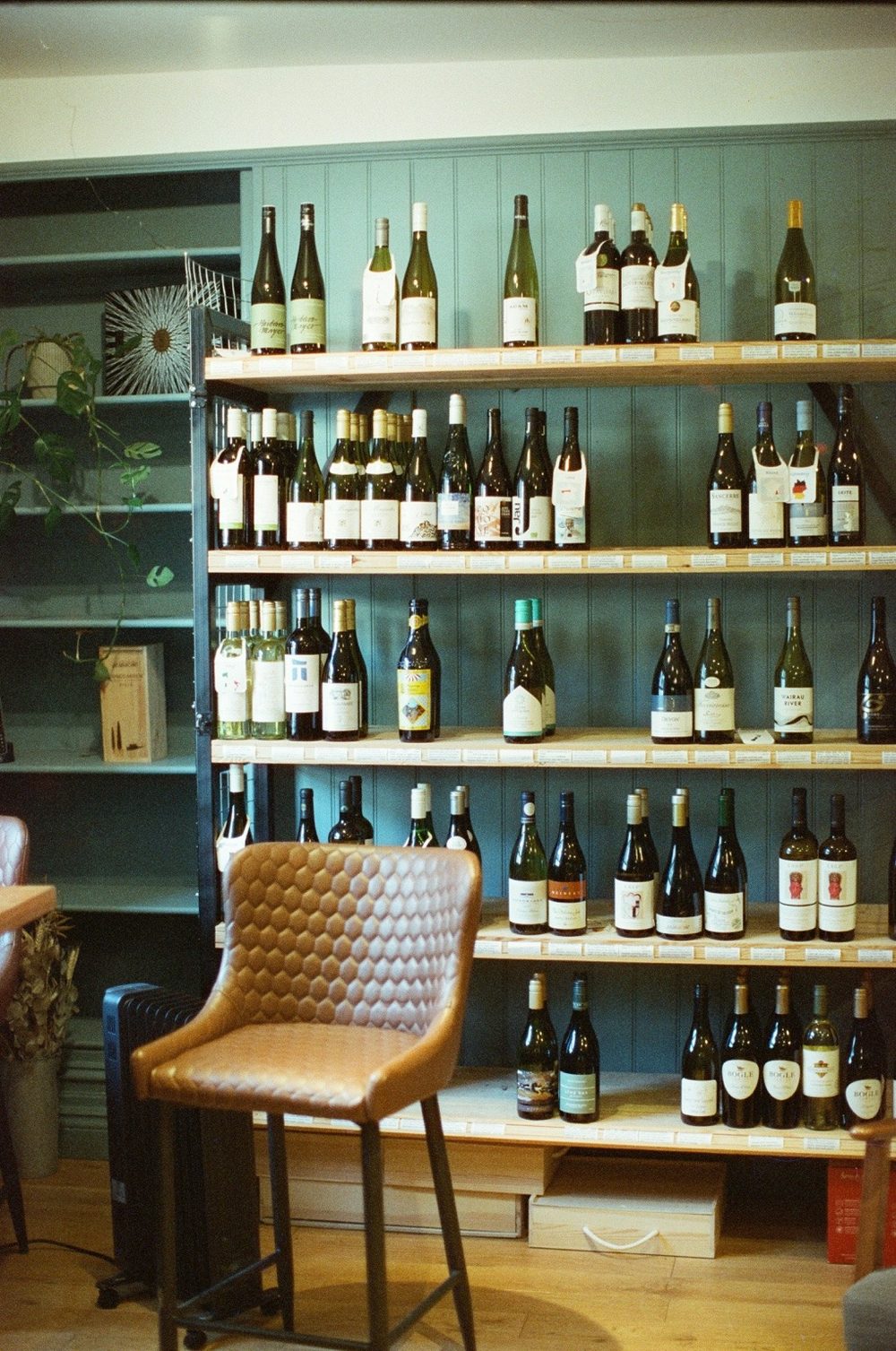
You are standing in front of a wall of wine.
Hundreds of bottles. New producers. New regions. Interesting labels. Things you have vaguely heard of and things you absolutely have not.
And then you see it.
The bottle you bought last time.
You liked it. Nobody complained. It cost about what you wanted to spend.
Into the basket it goes. Again.
This can feel slightly unadventurous. Wine is supposed to be about discovery, after all. Somewhere on that shelf might be a bottle you would like even more.
But buying the same wine is not necessarily a failure of curiosity.
Often, it is a perfectly sensible response to uncertainty.
Wine asks you to buy before you know
Most things are easier to judge before you pay for them.
You can try on a coat. Sit on a chair. Read ten pages of a book. Test a perfume.
Wine is different.
Usually, you cannot taste the bottle before you buy it.
You are making a prediction from whatever information is available: grape, region, producer, label, price, recommendation, medal, memory.
Research into wine buying shows that consumers use these external clues partly because the thing they really care about, how the wine will taste to them, is difficult to know in advance.
Which makes a bottle you already like unusually valuable.
It comes with evidence. Your own.
Familiarity removes some of the risk
A wine purchase can go wrong in several ways.
You can dislike it. You can feel that you wasted money. You can bring it to dinner and discover nobody else likes it. You can spend more than usual and wonder whether you made a ridiculous choice.
Research into perceived risk in wine purchasing finds that uncertainty and established price habits can affect willingness to pay and choice.
A familiar bottle avoids much of the problem.
You already know the ending.
This is particularly useful when the wine itself is not the main event.
Tuesday dinner. Friends coming over. A bottle for the fridge.
You may not want a discovery experience every time you buy wine.
Sometimes you just want wine.
Recognition is information
Even when we are not repeating the exact bottle, we often reach for something recognisable.
A grape we know. A region we trust. A producer we have seen before. A label we remember.
Wine-choice research repeatedly shows that brand, origin, price, awards and packaging can influence purchase decisions, with the mix changing between consumers.
This does not make recognition foolish. It makes it useful.
Faced with two unknown bottles, you have two uncertainties.
Faced with one unknown bottle and one wine you recognise, the decision becomes easier.
Ease has value.
Confidence changes the size of the leap
People who know more about wine do not necessarily abandon familiar wines.
But research suggests that wine knowledge, involvement and tolerance of risk are related to how readily some consumers seek variety.
One large household-purchase study identified distinct patterns including habitual buyers, brand-loyal consumers, switchers and active variety seekers.
Another study found that stronger variety seekers in its sample tended to report greater wine knowledge and involvement and greater tolerance of risk.
Trying something unfamiliar is easier when unfamiliar does not mean completely unknown.
If you know you like lighter reds, trying a new light red is a relatively small leap.
If the only information you have is, “I liked that bottle with the yellow label”, everything else on the shelf is a bigger gamble.
Knowledge creates more ways to recognise similarity.
Without it, repeating the bottle may be the safest information you have.
There is nothing wrong with having a house wine
There is a tendency to treat repetition as the opposite of good taste.
It isn’t.
Knowing that you reliably enjoy a particular bottle is useful.
Plenty of people have a coffee order they rarely change. Nobody suggests you need a different toothpaste every Tuesday to remain intellectually alive.
Some things earn repeat status because they work.
A wine you buy again and again might tell you more about your taste than the expensive bottle you tried once because somebody said it was important.
Pay attention to the repeat purchases. They contain clues.
Ask why it keeps winning
Suppose you have bought the same Sauvignon Blanc six times.
Why?
Perhaps you like the acidity. Perhaps it feels light. Perhaps you like the citrusy, green character. Perhaps you like that it is completely dry. Perhaps you know none of that and simply know it tastes good cold on a Friday evening.
All useful.
Now the familiar bottle can become a starting point rather than an endpoint.
Instead of asking, “What completely different wine should I try?”, ask, “What is it about this wine that keeps bringing me back?”
That is a much easier route into discovery.
Keep the part you like. Change one thing.
Discovery does not need to be a leap
If you love Malbec, you do not need to abandon it for an obscure grape simply to prove that you are interested in wine.
You could try a different Malbec. A different region. Something with similar richness but less weight. Something equally generous but more savoury. Something that keeps the easy pleasure but changes the fruit or texture.
Good discovery should feel like learning more about your taste, not repeatedly rolling the dice.
Sometimes the right move is familiar. Sometimes it is one step away. Occasionally you want the strange bottle.
The point is knowing which mood you are in.
Your repeat bottle is data
The bottle you keep rebuying is not evidence that you are boring.
It is evidence that something works.
The mistake is stopping there.
Notice what the bottle gives you. Notice what else you repeatedly enjoy. Notice what you consistently avoid.
Over time, those repetitions begin to form a much clearer picture than memorising a list of prestigious regions ever could.
You do not need to stop buying the same bottle.
Just learn why you keep choosing it.
Then familiarity stops being a dead end.
It becomes a way in.
Sources
- Francesco Caracciolo et al., “Variety seeking behavior in the wine domain: A consumers segmentation using big data”, Food Quality and Preference, 2022.
- Janeen Olsen et al., “Variety seeking by wine consumers in the southern states of the US”, International Journal of Wine Business Research, 2015.
- J. François Outreville, “Perceived risk: an experimental investigation of consumer behavior when buying wine”, Journal of Consumer Behaviour, 2016.
- Larry Lockshin et al., “Using simulations from discrete choice experiments to measure consumer sensitivity to brand, region, price, and awards in wine choice”, Food Quality and Preference, 2006.
- Simone Mueller and Gergely Szolnoki, “The relative influence of packaging, labelling, branding and sensory attributes on liking and purchase intent: Consumers differ in their responsiveness”, Food Quality and Preference 21(7) (2010), 774–783, DOI 10.1016/j.foodqual.2010.07.011.
Grapes in this piece
Read next
Learn
Why the same grape can taste completely different
A grape name is a useful clue, not a flavour recipe. Place, weather, harvest timing, fermentation, oak, lees and time can pull the same variety in strikingly different directions.
Guide
How to find a lighter red
“Lighter red” is a useful request once you know what you mean by it. Look for less body, moderate tannin, plenty of freshness and restrained oak, not simply the palest wine on the shelf.
Guide
If you love Sauvignon Blanc, drink these next
Do not abandon what you already know you like. Work out which part of Sauvignon Blanc keeps bringing you back (the acidity, citrus, green aromatics or sheer refreshment), then move one step sideways.