
Place
Beaujolais
Gamay is the constant; the result is not. Beaujolais runs from immediate, juicy reds to serious, structured cru wines, making it one of the clearest places to learn what a single grape can do across different sites.
The short version
Beaujolais has suffered from the success of one of its products.
Say the name and plenty of people still hear:
Nouveau.
Young.
Fruity.
Fun.
That is genuinely part of Beaujolais.
It is just nowhere near the whole thing.
The useful way to understand the region is this:
Gamay is the constant. Place changes the result.
The grape that matters
For red Beaujolais, Gamay is the protagonist.
It covers almost all of the region's producing vineyard area and runs through the full appellation system.
That makes Beaujolais unusually educational.
Instead of changing grape every few miles, you can watch one grape alter its expression.
At its most immediate, Gamay can be bright, juicy and full of red fruit.
In more structured sites and more ambitious wines, it can become deeper, firmer and capable of developing with age.
So if your mental picture of Gamay is “light red wine”, keep it, but leave the door open.
The map is more useful than the stereotype
Beaujolais has 12 appellations.
There are two broad regional names:
Beaujolais
and
Beaujolais-Villages.
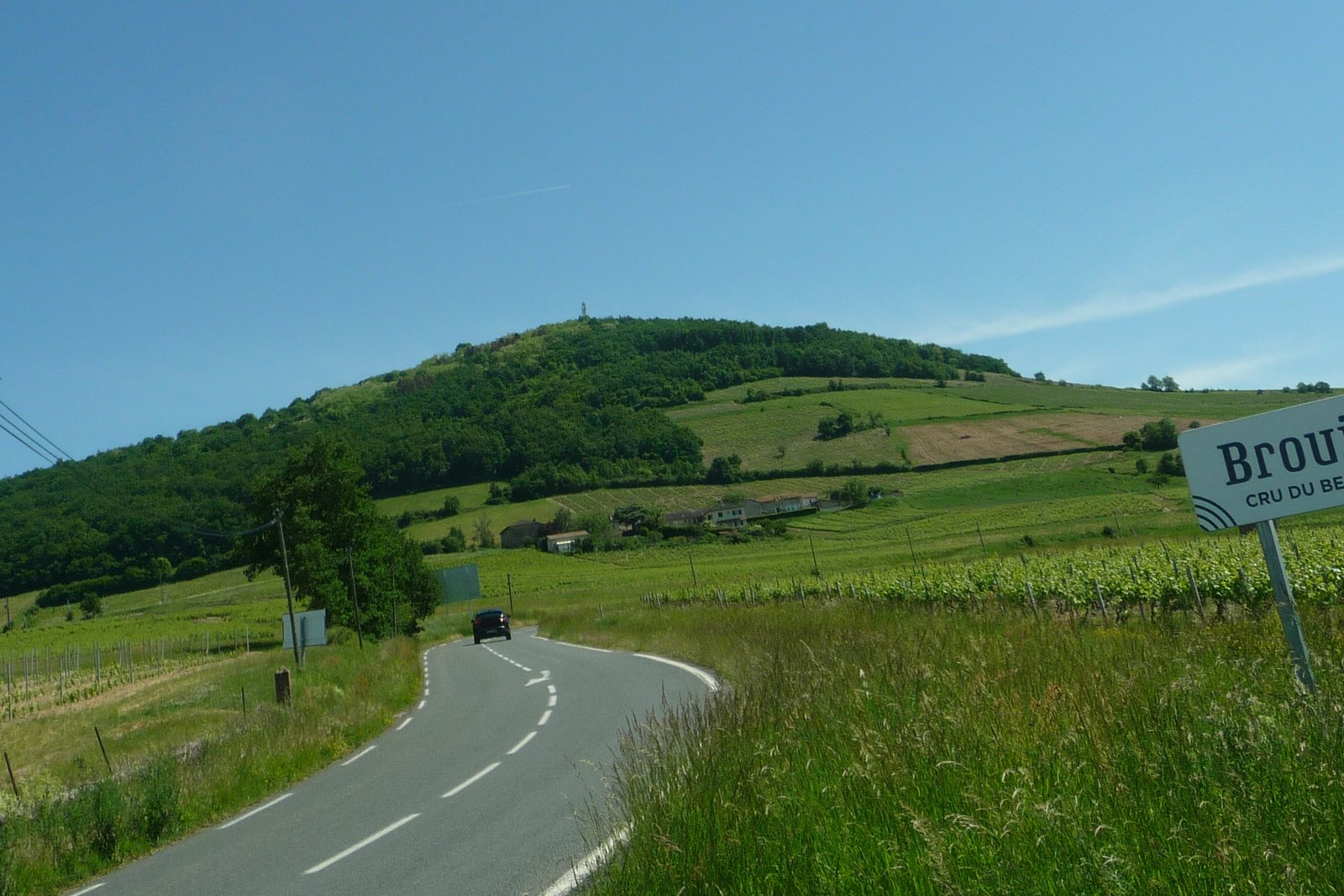
Then there are ten named crus in the north, including places such as Fleurie, Morgon and Moulin-à-Vent.
You do not need to memorise all ten today.
The useful point is that a bottle labelled with the name of a cru is telling you something more specific than a bottle simply labelled Beaujolais.
Specificity is not an automatic guarantee that you will prefer it.
It just gives you more information about where the wine came from.
Why this place does not taste like one thing
Beaujolais is small enough to look simple on a map and geologically complicated enough to punish the simplification.
A major regional study identified more than 300 soil profiles.
Broadly, the southern part of the vineyard contains more clay and limestone influence, while much of the northern landscape (where the crus sit) contains granite-derived and sandy soils alongside other rock types.
Altitude, exposure and the individual site add another layer.
Then the grower decides how to farm and make the wine.
That is why “Gamay from Beaujolais” can mean something gulpable and immediate or something you would happily leave in a cellar.
Where Nouveau fits
Beaujolais Nouveau is an early-release expression designed around immediacy.
It has enormous cultural visibility.
It is not a summary of the region's ceiling.
Think of it as one answer to the question:
What can Gamay do?
Not the answer.
If Nouveau is your only experience of Beaujolais, the most useful next move is not to abandon the region.
It is to become more specific.
How to read it on a label
Start with three levels.
Beaujolais
Broad regional origin.
Beaujolais-Villages
A more restricted set of communes, sitting between the regional appellation and the crus.
A named cru
For example, Morgon, Fleurie, Brouilly or Moulin-à-Vent.
The cru name may appear far more prominently than the word Beaujolais.
That matters.
Someone can drink Beaujolais regularly without seeing “Beaujolais” as the main word on every label.
If you already like
If you like Pinot Noir for red fruit and freshness but want something a little more openly joyful, start here.
If you like Malbec but are trying to move lighter without moving to white wine, Beaujolais is one of the cleanest routes.
If you think lighter red means less serious, try the region at cru level.
And if you already like basic Beaujolais, move sideways rather than automatically “up”: try different Villages wines and crus and notice what changes.
The thing to remember
Beaujolais is not a flavour.
It is a region using one dominant red grape to produce a surprisingly wide spectrum of wines.
Remember:
Gamay first. Then ask where.
That is when Beaujolais becomes interesting.
Sources
- Inter Beaujolais, “Nos 12 appellations”: https://www.beaujolais.com/decouvrir/nos-12-appellations/