
Place
Loire Valley
The Loire is not one wine style stretched along a river. It is a sequence of different vineyard areas, grapes and traditions, from Muscadet by the Atlantic to Chenin, Cabernet Franc and Sauvignon further inland.
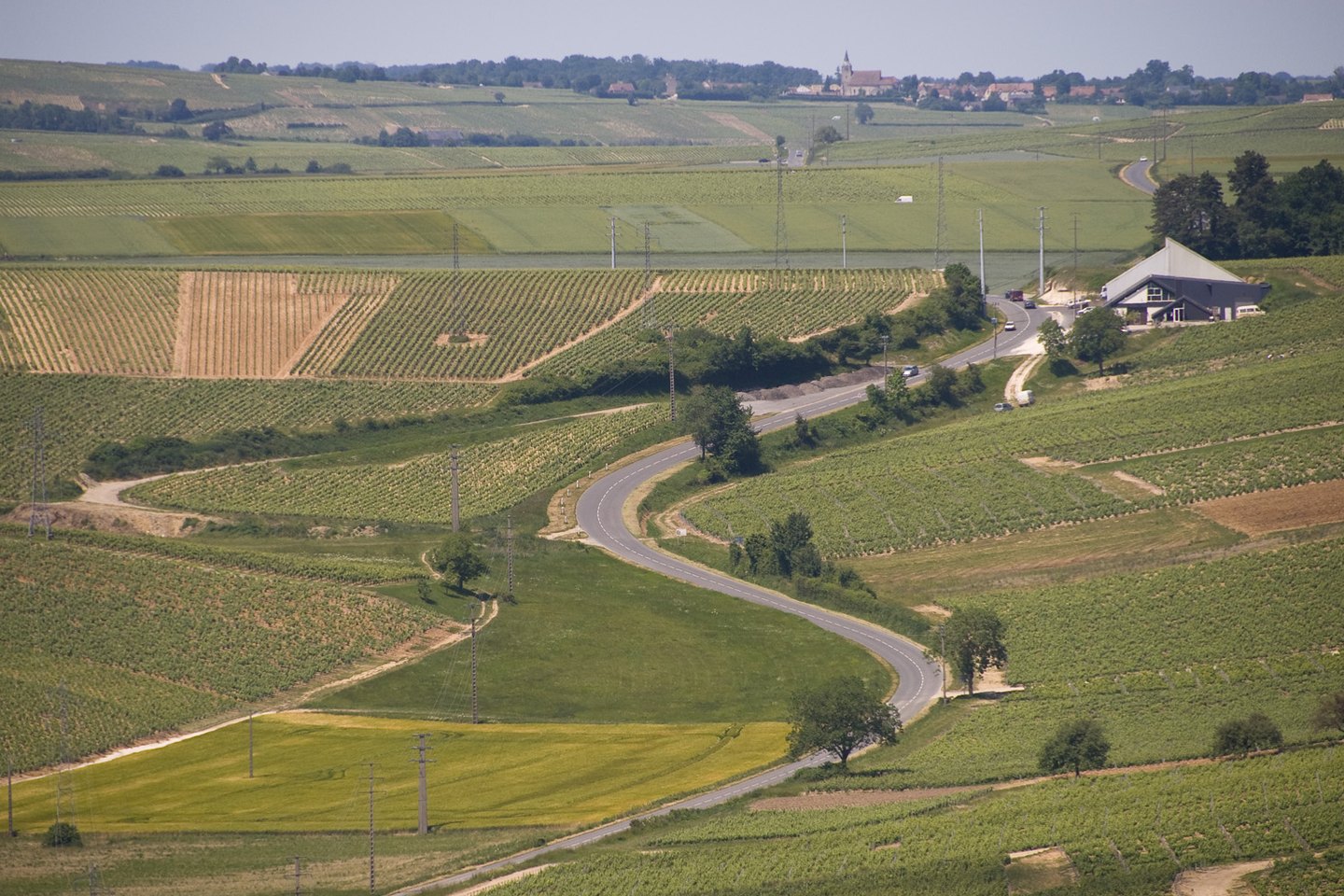
The Loire makes more sense if you follow the river and then follow the grape
The Loire can look incoherent from a restaurant list.
Muscadet.
Vouvray.
Chinon.
Sancerre.
Sweet wine. Sparkling wine. Cabernet Franc. Sauvignon Blanc.
They do not appear to belong to one simple style.
They do not.
The useful way to understand the Loire is not to search for one regional taste.
It is to move along the river and notice how the grapes and wines change.
The useful map
A first map needs only four broad movements.
Nantes
Closest to the Atlantic.
This is Muscadet country, built around Melon Blanc and dry, fresh white wine.
Anjou-Saumur
Chenin Blanc becomes central, capable of dry, sweet and sparkling wine.
Cabernet Franc is also important, alongside rosé and other styles.
Touraine
A particularly diverse middle section.
Chenin remains important around places such as Vouvray; Cabernet Franc shapes major red-wine appellations; Sauvignon Blanc becomes increasingly visible.
Centre-Loire
Sancerre and Pouilly-Fumé provide the most internationally familiar Sauvignon Blanc reference points, while Pinot Noir also appears in several appellations.
That is not the entire Loire.
It is enough to stop the region feeling random.
What you actually drink
The Loire produces almost every major wine style:
dry white, sweet white, red, rosé and traditional-method sparkling wine.
The grapes change with geography.
Melon Blanc matters around Muscadet.
Chenin Blanc is central through much of Anjou-Saumur and Touraine.
Cabernet Franc is fundamental to many reds.
Sauvignon Blanc becomes a major reference in Touraine and especially Centre-Loire.
Gamay, Pinot Noir, Côt and other grapes add further layers.
The diversity is not a complication around the Loire story.
It is the Loire story.
The key variable: where are you on the river?
Moving inland changes climate as well as grape.
The western vineyards feel more Atlantic.
Further east, continental influence becomes stronger, though local rivers, slopes and microclimates keep the reality more complicated than a neat west-to-east rule.
That means a Loire label is usually easier to understand if you ask two questions:
Where is this?
and
Which grape normally matters there?
Those questions get you further than trying to memorise every appellation independently.
How to read the label
Loire labels often lead with place rather than grape.
So learn a few translations rather than the whole dictionary.
Muscadet points you towards Melon Blanc.
Vouvray points you towards Chenin Blanc.
Chinon usually points you towards Cabernet Franc for red wine.
Sancerre white points you towards Sauvignon Blanc.
Pouilly-Fumé is Sauvignon Blanc.
Once those anchors are familiar, the rest of the map becomes easier to attach.
What people often misunderstand
Loire does not mean Sauvignon Blanc.
Sancerre is famous, but it is only one part of the region.
Loire white does not automatically mean dry.
Chenin can move from dry through sweet and sparkling styles.
Loire red does not automatically mean light.
Cabernet Franc can range from fresh and immediate to more structured expressions.
Muscadet is a place-based wine name, not the grape.
The grape is Melon Blanc.
Start here
If you like very crisp white wine
Start in Nantes with Muscadet, or move east towards Sauvignon-based whites.
If you want to understand one grape changing form
Choose Chenin Blanc and compare dry, sweeter and sparkling expressions.
If you usually overlook Loire reds
Try Cabernet Franc as a route into red wine built around freshness, savoury character and varying levels of structure.
If you want bubbles
The Loire has a substantial traditional-method sparkling-wine culture; Vouvray is also an especially clear example of one grape working as both still and sparkling wine.
Worth knowing
The Loire is one of the best regions for learning that a wine region does not need one signature grape to have a coherent identity.
Its coherence comes from the river, the changing landscape and a set of grapes that repeatedly find different jobs along it.
Explore the grapes
Chenin Blanc
Dry, sweet, sparkling, lean or richly textured: Chenin Blanc changes form dramatically, but its naturally high acidity is the thread that keeps the family resemblance.
Cabernet Franc
Fresh red fruit, herbal and floral lift, and usually less sheer weight than Cabernet Sauvignon: Cabernet Franc is one of the most useful red grapes for drinkers who want structure without heaviness.
Sauvignon Blanc
Bright, aromatic and often unmistakable, but not one fixed flavour. Sauvignon Blanc can move from green and citrusy to riper, fruitier or more textured depending on place and winemaking.
Further reading
Guide
How to find a lighter red
“Lighter red” is a useful request once you know what you mean by it. Look for less body, moderate tannin, plenty of freshness and restrained oak, not simply the palest wine on the shelf.
Guide
If you love Malbec, drink these next
Do not search for another grape that tastes exactly like Malbec. Work out whether you love the dark fruit, generous body, smoothness, spice or freshness, then keep that part and change something else.