
Place
Mosel
Riesling, steep river valleys and a remarkable range from bone-dry to intensely sweet, but the useful way into Mosel is to understand how lightness, acidity and place can coexist with real intensity.
The short version
Mosel is one of the best places to unlearn the idea that powerful wine has to feel heavy.
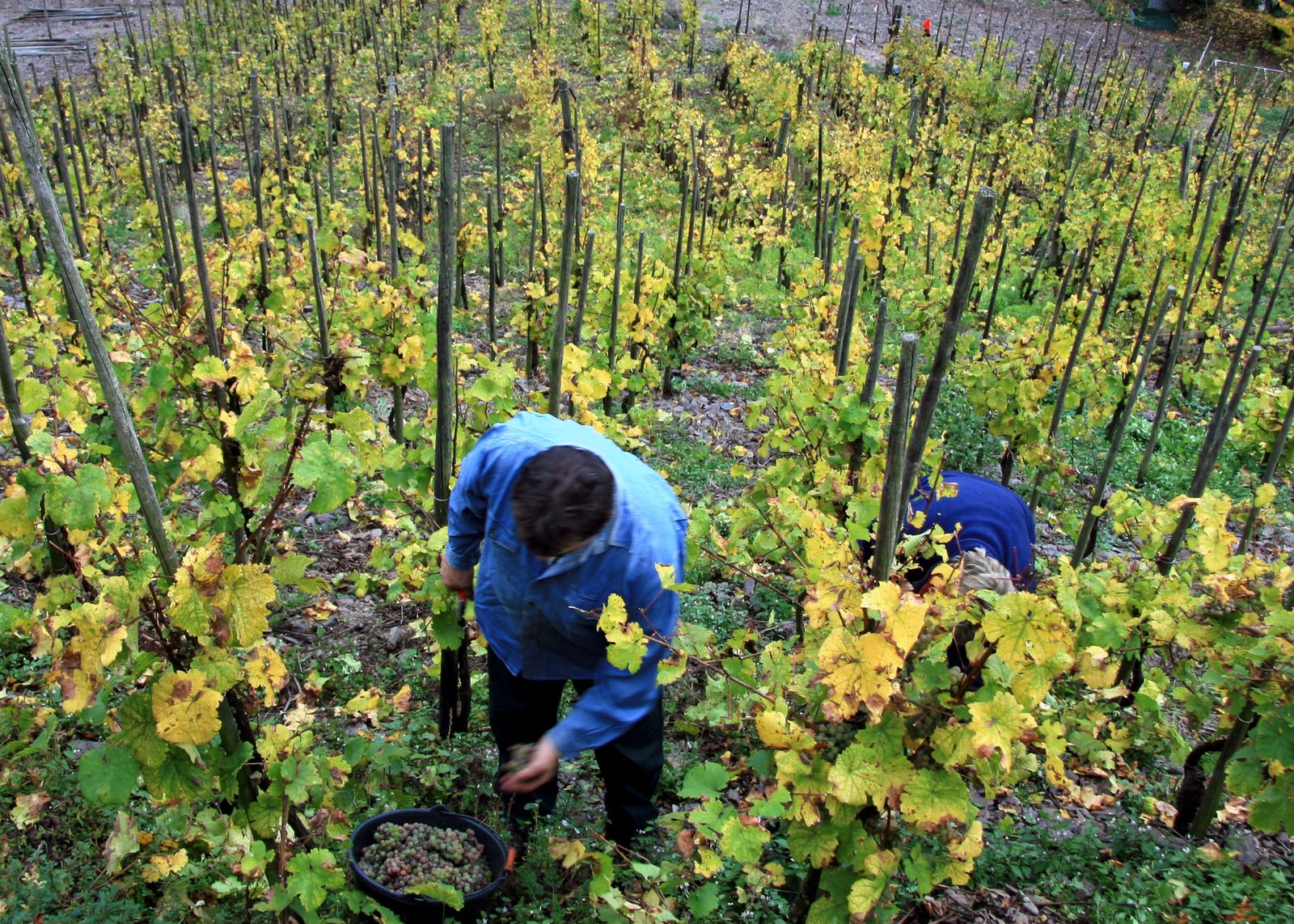
Its signature grape is Riesling. Its vineyards follow the Mosel and its tributaries, the Saar and Ruwer, often on slopes so steep that farming them looks mildly unreasonable.
The wines can be dry.
They can be off-dry.
They can be sweet.
Some can be strikingly low in alcohol. Others are fuller and more concentrated.
What tends to connect the best-known Mosel styles is not one sweetness level. It is a particular combination of freshness, aromatic clarity and intensity without unnecessary weight.
Why this place tastes like it does
The river valleys matter.
So do the slopes.
Around 40% of vineyards in the Mosel, Saar and Ruwer lie on steep slopes with gradients above 30%. In a cool wine-growing region, slope and exposure can help vines capture warmth and light while the rivers shape the local landscape and climate.
Then there is the soil.
Mosel is famous for slate, and fairly so. Much of the lower and Middle Mosel is associated with slate-rich steep sites.
But “Mosel = slate” is too neat.
The Upper Mosel includes substantial shell-limestone soils. Flat areas and different parts of the valley bring other materials too.
The useful lesson is not that one rock creates one flavour.
It is that Mosel contains more geological and geographical variation than the postcard version suggests.
The grape that matters
Riesling is the centre of gravity.
It is by far the region's leading variety and is particularly good at carrying acidity, aroma and differences in growing conditions without needing enormous body.
That is why Mosel can feel so precise.
A glass may give citrus, orchard fruit, flowers, herbs or more developed flavours with age, but the more useful clue is structural: Riesling can stay vivid even when the wine contains some sweetness.
Mosel also grows other grapes, including Müller-Thurgau, Elbling and Pinot varieties.
So “Mosel” does not automatically mean Riesling.
It just very often does.
Sweetness is not the hierarchy
This is the part worth getting straight early.
Mosel makes excellent dry wine.
It makes excellent wines with some residual sweetness.
And it makes extraordinary fully sweet wines.
One is not the beginner version of another.
The right question is:
How dry do I want this particular bottle to feel?
If you want dry wine, the word trocken on a German label is a genuinely useful clue.
Beyond that, producer, site, vintage and style matter more than memorising a ladder of terminology before you are allowed to order a glass.
What changes across the region
“Mosel” covers the Mosel, Saar and Ruwer and is divided into several areas.
The Middle Mosel contains many of the names that built the region's international reputation.
The Saar and Ruwer can feel like their own worlds within the larger region.
The Upper Mosel changes the geological picture substantially, including more limestone and a stronger role for grapes such as Elbling.
This is why two wines carrying Mosel on the label can share freshness while differing noticeably in weight, ripeness, aroma and texture.
How to read it on a label
Start with four questions.
Is it Riesling?
Does it say trocken?
Is a specific village or vineyard named?
Who made it?
That is enough to begin.
You do not need to master German wine classification to drink Mosel intelligently.
A specific site can tell an experienced drinker a great deal, but the producer and the dry/sweet intention may be more immediately useful to somebody starting out.
If you already like
If you love Sauvignon Blanc because of its freshness but want less overt green aroma and more structural precision, Mosel Riesling is a useful direction.
If you like Chardonnay but want less width and more line, try a dry Riesling.
If you think you dislike sweet wine because you associate sweetness with heaviness, Mosel is an interesting place to challenge the assumption. Acidity can change the whole experience.
And if you already love Riesling, Mosel is where the grape becomes a map rather than a category.
The thing to remember
Do not remember Mosel as:
sweet German Riesling.
Remember it as:
a place where Riesling can be intensely expressive without becoming heavy.
Then decide how dry you want it.
That one distinction makes the region much easier to use.
Sources
- Mosellandtouristik, “Mosel – fascination wine”: https://en.visitmosel.de/wine-cuisine/mosel-fascination-wine
- German Wine Institute, Elbling: https://www.winesofgermany.com/our-wine/grape-varieties/grape-variety/99/elbling
Further reading
Learn
Acidity: the reason wine can feel fresh
Acidity is one of the main reasons wine can feel bright, mouth-watering and alive. Learn to notice it through structure rather than citrus vocabulary, and stop confusing high acidity with dryness or quality.
Learn
Dry, sweet and everything in between
“Dry” in wine is about sugar, not the drying sensation associated with tannins. Sweetness is real, measurable and surprisingly easy to misread once fruit, acidity and alcohol enter the glass.
Learn
Why place matters
Place can change wine because it changes the conditions in which the vine grows. Climate, water, topography, soil and human practice interact, but that is very different from saying you can literally taste rocks in the glass.
Guide
If you love Sauvignon Blanc, drink these next
Do not abandon what you already know you like. Work out which part of Sauvignon Blanc keeps bringing you back (the acidity, citrus, green aromatics or sheer refreshment), then move one step sideways.