
Journal
Climate change is changing what “classic” wine tastes like
Wine regions are built around the idea that place gives a wine identity. But climate is part of place, and it is moving. Preserving a “classic” regional style may increasingly require changing how that style is made.
“Classic” sounds more fixed than it really is
Classic Bordeaux.
Classic Burgundy.
Classic Mosel Riesling.
Classic Northern Rhône Syrah.
Wine uses the word as though the taste were stored somewhere in the soil waiting to be reproduced.
It is not.
A recognisable regional style emerges from an equilibrium.
Place.
Climate.
Grape variety.
Plant material.
Farming.
Harvest timing.
Winemaking.
And generations of decisions about what the region thinks its wine should be.
Change one of those things and the wine may change.
Climate change is altering one of the largest.
The vineyard can stay in the same place while its conditions move
The map does not have to change for the place to change.
Warmer growing seasons advance the vine's development.
Ripening can happen earlier.
Harvest can move.
Water stress can intensify.
The balance between sugar, acidity, phenolics and aroma can shift.
A major scientific review published in 2024 found that harvests have advanced by roughly two to three weeks over the past forty years across most wine-growing regions.
That does not mean every vineyard has moved by the same amount.
It means one of wine's basic seasonal clocks is already running differently.
This is why climate change can become something you taste
Grapes do not ripen according to one single dial.
Sugar accumulates.
Acids change.
Colour and tannin develop.
Aroma precursors develop.
The vine experiences water and heat stress.
Those processes interact.
They do not always move in perfect synchrony.
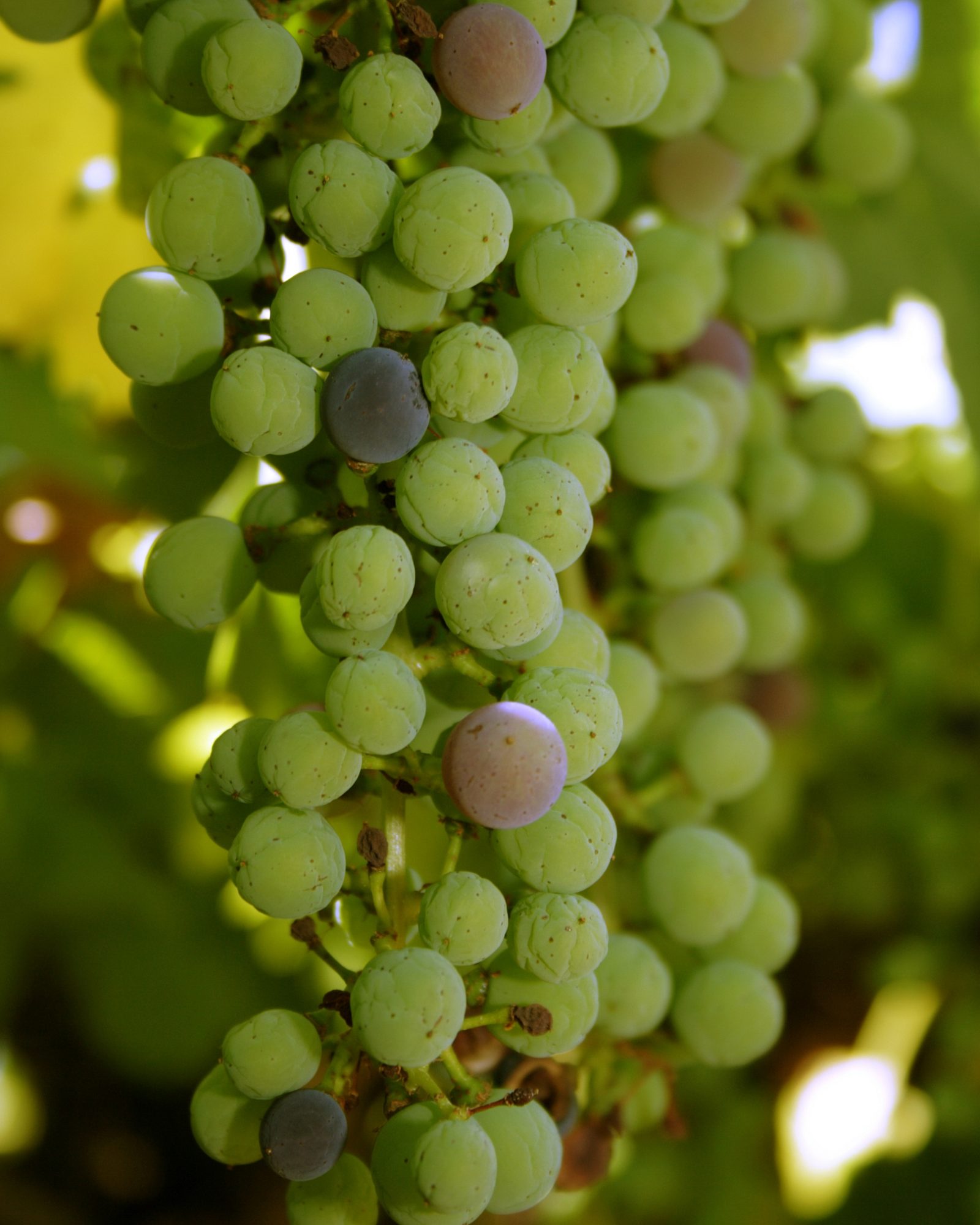
Under warmer conditions, grapes can accumulate sugar faster and lose acidity differently.
Ripening can move into hotter parts of the season.
Growers may harvest earlier to preserve freshness.
Or wait for other components to reach the maturity they want.
The final wine is therefore not simply “hotter climate = riper wine”.
The grower is part of the equation.
But the equation has changed.
What happens to a region built around balance?
This is where the idea of typicity becomes interesting.
A region does not merely need grapes to survive.
It wants its wine to remain recognisable.
Bordeaux does not want simply to produce red wine.
Burgundy does not want simply to keep Pinot Noir alive.
An appellation exists partly because a place claims that its wines possess a distinctive identity worth protecting.
Climate change turns that identity into a moving target.
Bordeaux is already testing the question
Bordeaux's own industry body describes rising temperatures as something that can alter the profile of its wines.
Growers are adapting.
Pruning later.
Changing canopy decisions.
Harvesting earlier or at night.
Managing planting density and water stress differently.
And, in some Bordeaux appellations, experimenting within strict limits with additional grape varieties selected partly for their ability to handle changing conditions.
That is a remarkable thing when you think about it.
A region famous for the authority of its tradition is adapting the ingredients of that tradition in order to protect its future.
This is not the end of terroir
It is almost the opposite.
If terroir meant:
the place never changes,
then climate change would make the idea collapse.
But terroir has never been only geology.
It is the interaction between a site, a climate, a plant and human practice.
The human part has always adapted.
Growers changed varieties.
Changed pruning.
Changed planting density.
Changed harvest decisions.
Changed cellar practices.
Some changes happened so long ago that we now call the result tradition.
The regulators are having to adapt too
In France, the INAO has created frameworks allowing appellations to trial varieties considered useful for adaptation.
The language around this is revealing.
Adapt.
Experiment.
Preserve typicity.
Protect the link to origin.
Those objectives sit beside each other because the problem is no longer:
change or tradition.
It is:
which changes allow the tradition to remain meaningful?
A rulebook written around yesterday's climate can eventually become less traditional in effect than a carefully controlled adaptation.
Burgundy is asking its own version of the question
Burgundy is investing in climate-adaptation research across vineyard practice, resistant plant material and the future of higher-altitude sites.
Again, the point is not that Burgundy is about to become something else.
The point is that remaining Burgundy increasingly requires active decisions.
Where is the cooler exposure?
What happens higher up the slope?
Which material ripens at the right moment?
How can growers keep freshness, balance and regional identity under different conditions?
Climate makes those questions more urgent.
Altitude may become a different kind of asset
Wine has always attached value to site.
Slope.
Aspect.
Soil.
Drainage.
Exposure.
Climate change can rearrange the hierarchy between sites.
A place once considered marginal because it was too cool may become useful.
A higher site may offer the slower ripening or freshness that a warmer site once delivered naturally.
That does not mean every vineyard should move uphill.
It means the old map of advantage was drawn partly by an old climate.
The grape itself is part of the history, not outside it
Wine culture often treats famous grape-place pairings as inevitable.
Pinot Noir and Burgundy.
Riesling and the Mosel.
Cabernet and Bordeaux.
Syrah and the Northern Rhône.
They feel natural because the relationship has had time to become cultural fact.
But grapes are agricultural choices.
Some ripen earlier.
Some later.
Some handle heat or drought differently.
Some retain acidity differently.
As conditions change, regions face an uncomfortable question.
Is the identity of a place defined by producing the same varieties under increasingly different conditions?
Or by preserving a recognisable balance even if the plant material has to evolve?
There is no single answer.
That is what makes the question important.
A “classic” style has never been a frozen recipe
Think about what vintage means.
We already accept that the same place can taste different from one year to the next.
Cool year.
Hot year.
Wet year.
Dry year.
Earlier harvest.
Later harvest.
We call those differences vintage character.
Climate change is more profound because it shifts the baseline beneath the vintages.
The exceptional warm year can become less exceptional.
The old average becomes less useful.
The reference point itself moves.
Some changes may initially look like improvements
This is another reason the story is not simple.
Historically cool regions can benefit from warmer conditions in some years.
Grapes may ripen more reliably.
Previously marginal sites can become viable.
Seasons that once struggled for maturity can produce generous fruit.
Climate change is not experienced as one uniform decline in wine quality.
But adaptation becomes harder as extremes intensify and the range of conditions moves beyond what existing varieties, sites and practices were built around.
The question is not whether warming can ever produce a beautiful wine.
Of course it can.
The question is what happens to regional identity when beautiful wine requires a different equilibrium.
Tradition may have to become more active
There is a comforting version of tradition in which preservation means leaving things alone.
Wine has never really worked that way.
A vineyard is maintained every year.
Vines are replanted.
Selections change.
Cellars change.
Rules change.
Markets change.
Taste changes.
Climate changes too.
The difference is speed.
When the environment moves quickly, regions have less time to let adaptation become invisible.
We can watch the tradition being renegotiated.
“Classic” may become a question rather than an answer
What should remain?
Freshness?
Alcohol balance?
Aromatic character?
Tannin structure?
The dominance of a particular grape?
A historical blend?
A particular vineyard hierarchy?
The legal rules?
The sensory memory drinkers associate with the name?
Those things can pull in different directions.
Climate change forces wine regions to decide which parts of their identity are fundamental.
And which parts were simply the result of conditions that happened to exist when the identity was formed.
The paradox is that change may be how continuity survives
A late-ripening variety.
A different rootstock.
A higher site.
A later pruning date.
A different canopy.
A night harvest.
A revised appellation rule.
None of these sounds romantic on a label.
But wine's romance has always been produced by practical decisions in a vineyard.
The aim is not to manufacture the old climate.
It is to work out what should still be recognisable when the climate is no longer old.
That is a more interesting definition of tradition.
Not repetition.
Continuity.
Sources
- Cornelis van Leeuwen et al., “Climate change impacts and adaptations of wine production”, Nature Reviews Earth & Environment 5 (2024), 258–275: https://www.nature.com/articles/s43017-024-00521-5
- Bordeaux.com, “How Bordeaux is adapting to climate change”: https://www.bordeaux.com/en/mag/blog/how-bordeaux-is-adapting-to-climate-change/
- INAO, “Varieties of interest for adaptation (VIFA)”: https://www.inao.gouv.fr/en/vifa
- Bourgogne Wine Board, “Technical Expertise and Innovation: 3 Key Areas Shaping the Future of Bourgogne”, 12 March 2026: https://www.bourgogne-wines.com/press/technical-expertise-and-innovation-3-key-areas-shaping-the-future-of-bourgogne%2C2333%2C9344.html
Read next
Learn
Why place matters
Place can change wine because it changes the conditions in which the vine grows. Climate, water, topography, soil and human practice interact, but that is very different from saying you can literally taste rocks in the glass.
Learn
Why the same grape can taste completely different
A grape name is a useful clue, not a flavour recipe. Place, weather, harvest timing, fermentation, oak, lees and time can pull the same variety in strikingly different directions.
Learn
Acidity: the reason wine can feel fresh
Acidity is one of the main reasons wine can feel bright, mouth-watering and alive. Learn to notice it through structure rather than citrus vocabulary, and stop confusing high acidity with dryness or quality.