
Journal
The heavy wine bottle is losing its status
For years, thick glass could signal seriousness before the cork was pulled. Now wine businesses are trying to remove weight from the bottle without removing prestige from the wine. The change is practical, environmental and cultural.
The bottle gets to speak before the wine does
Pick up two bottles.
One feels ordinary.
The other lands in your hand with the density of a small architectural object.
Before either is opened, the second one has already told you a story.
Serious.
Expensive.
Important.
Perhaps collectible.
This is an unusually effective piece of wine communication because it does not need words.
You feel it.
The problem is that the bottle has no idea whether the wine is good.
Heavy glass is not just an aesthetic decision
Glass can be one of the largest contributors to a wine's carbon footprint.
That changes the meaning of unnecessary weight.
An extra-heavy bottle is not only a luxury cue.
It is more material.
More weight to move.
More packaging attached to the same 750 millilitres of wine.
Multiply that across millions of bottles and the difference stops feeling decorative.
It becomes infrastructure.
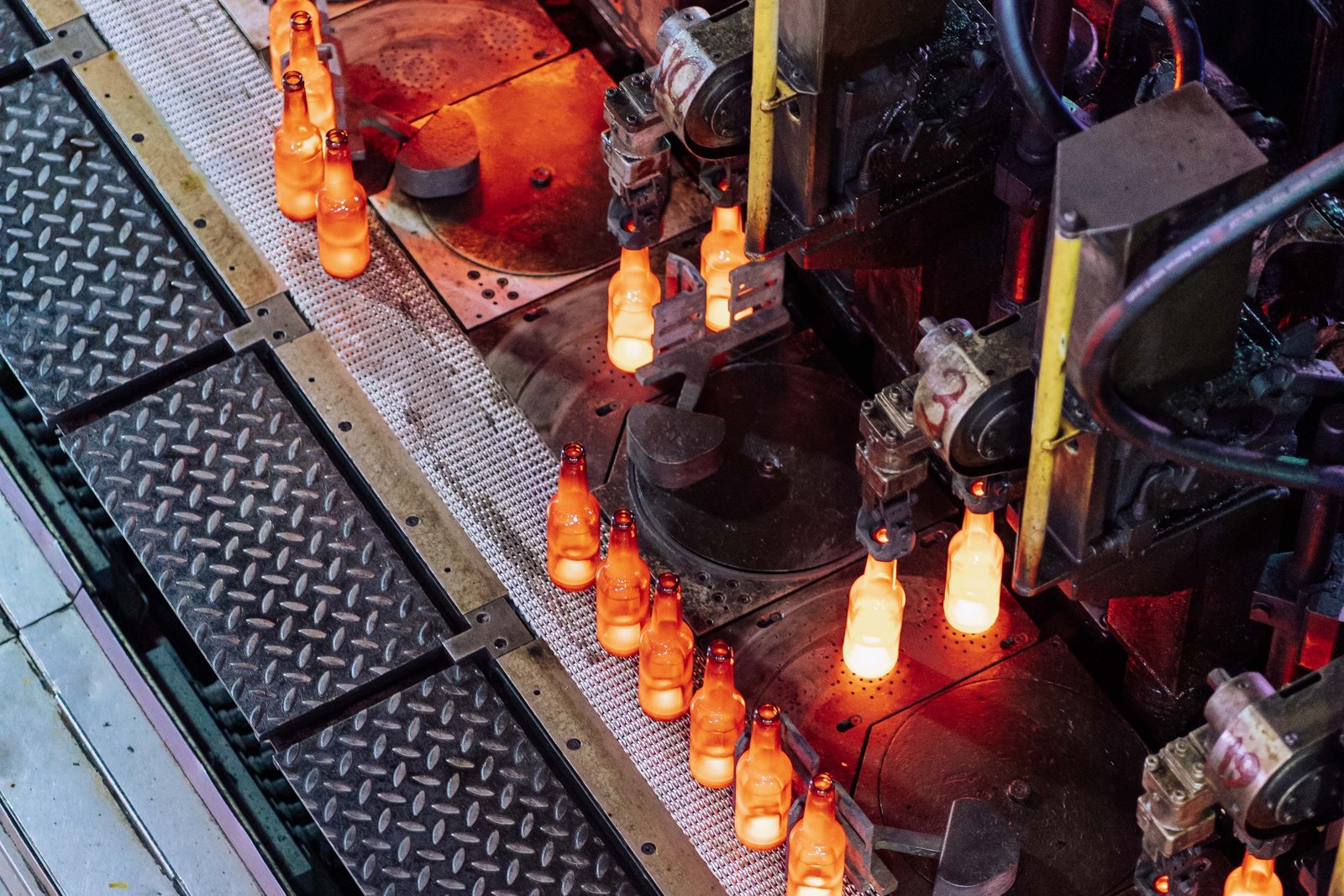
The industry has put a number on the problem
The Sustainable Wine Roundtable's Bottle Weight Accord asks participating businesses to bring the average weight of their 750ml still-wine bottles below 420 grams by the end of 2026.
That number matters because it turns a vague sustainability ambition into something measurable.
But the more interesting thing is the existence of the Accord at all.
Bottle weight has moved from the margins of wine sustainability into a shared industry target.
Retailers, producers and distributors are now treating glass weight as something worth managing.
The prestige object has become a line item.
The hard part is not only glass
The harder problem is meaning.
Wine has spent decades teaching consumers to read weight as value.
Heavy bottles borrow from the visual language of perfume, spirits and other luxury goods.
They make the object feel expensive before the liquid gets involved.
That signal does not disappear merely because an emissions calculation says it should.
A producer can reduce glass in a factory faster than it can rewrite what “premium” feels like in somebody's hand.
Which is why the Catena example matters
Catena has publicly described its work to reduce bottle weight while trying to change the idea that heavier packaging means better wine.
The interesting part is not that one producer found a lighter bottle.
It is that a producer associated with serious wine is willing to challenge the status code itself.
Premium wine cannot become lighter at scale if lighter packaging continues to look like an apology.
The category has to make restraint look intentional.
Consumers may be less attached to weight than the industry fears
Recent work around sparkling-wine packaging found that bottle weight was not a major priority for most consumers surveyed, although a smaller group still associated heavier glass with higher quality.
That distinction is useful.
The prestige signal exists.
It may simply be weaker than the category has assumed.
Wine is full of traditions that survive partly because everybody believes somebody else needs them.
Bottle weight may be one of them.
Sparkling wine shows where the argument has limits
Not every heavy bottle is pointless.
Sparkling wine sits under pressure.
Bottle design therefore has a genuine safety job that a still-wine bottle does not.
Current work on lightweight sparkling bottles is necessarily more technical because failure has consequences beyond wasted glass.
This matters because sustainability arguments become less persuasive when they flatten engineering into virtue.
The useful question is not:
Why is this bottle heavy?
It is:
Does this bottle need to be this heavy for the job it is doing?
The 420-gram target is not really the endpoint
A future wine shelf could contain lighter bottles without anybody thinking much about them.
That would be progress.
But there is a more interesting possibility.
What if unnecessary weight eventually begins to look unsophisticated?
Not luxurious.
Not reassuring.
Just inefficient.
Wine has repeatedly changed the objects that signal seriousness.
Cork length.
Label design.
Bottle shape.
Wooden cases.
Glass weight can change too.
The new status signal may be restraint
There is an old version of luxury that proves value by using more material.
More glass.
More box.
More weight.
More ceremony.
There is another version that proves competence by knowing what can be removed.
That version feels increasingly relevant to wine.
A beautiful bottle does not have to feel cheap.
It simply no longer needs to demonstrate the quality of the wine by being difficult to lift.
The carbon argument for lighter glass is measurable.
The cultural argument is simpler.
The bottle should stop trying to do the wine's job.
Sources
- Sustainable Wine Roundtable, “The Bottle Weight Accord”: https://swroundtable.org/action-areas/the-bottle-weight-accord/
- Sustainable Wine Roundtable, “Foundations for the Sparkling Bottle Weight Accord”, 23 June 2025: https://swroundtable.org/foundations-for-the-sparkling-bottle-weight-accord/
- Sustainable Wine Roundtable, “Lighter wine, greater impact: Progress from one year of the BWA”, 21 January 2025: https://swroundtable.org/lighter-wine-greater-impact-progress-from-one-year-of-the-bwa/
Read next
Learn
The £15 bottle vs the £50 bottle: what are you actually paying for?
The £50 bottle is not simply the £15 bottle with £35 more quality inside it. Some of the difference can buy costlier farming, fruit, time and scarcity. Some of it buys reputation and demand.
Learn
Why wine tastes the way it does
Wine is not a flavour the grape was hiding. What you taste comes from the grape, how ripe it became, fermentation, extraction, maturation, time and the way your own senses put those signals together.