
Learn
The £15 bottle vs the £50 bottle: what are you actually paying for?
The £50 bottle is not simply the £15 bottle with £35 more quality inside it. Some of the difference can buy costlier farming, fruit, time and scarcity. Some of it buys reputation and demand.
Stand in front of two bottles of wine.
One is £15. One is £50.
It is reasonable to assume the £50 bottle must be better. After all, that is usually what a higher price is trying to tell us.
But wine is awkward.
Price can tell you something about what went into a bottle. It can also tell you something about where it came from, how scarce it is and how much people want it.
What it cannot do is tell you, on its own, how much you will enjoy drinking it.
Some costs barely care what the wine costs
Every bottle has costs around the liquid: packaging, transport, tax, distribution and retail.
Those costs do not rise neatly in proportion to the price of the wine. A bottle does not become three times heavier to ship because its shelf price has tripled. Two wines at the same alcoholic strength do not attract more Alcohol Duty simply because one is more prestigious.
That matters because fixed or semi-fixed costs take up more of a cheaper bottle.
As the retail price rises, there is more economic room for the wine itself, and the way it was made, to become expensive.
The interesting question is what fills that room.
Grapes can have completely different economics
Wine begins as an agricultural product.
Land costs differ. Labour costs differ. Some vineyards can be worked largely by machine. Others sit on slopes or in conditions that demand much more hand work.
The grapes themselves can also command radically different prices depending on place, reputation, supply and demand.
Research in wine economics shows that origin and producer reputation can explain meaningful differences in wine and grape prices.
That does not mean expensive grapes automatically make delicious wine.
It means two bottles can begin with very different raw-material economics long before anyone designs the label.
Fewer bottles can mean higher cost per bottle
Yield matters too.
Imagine two vineyards of the same size. One produces enough fruit for twice as many bottles as the other.
The second vineyard still has land to maintain, vines to prune, people to pay and equipment to run. There are simply fewer bottles across which to spread those costs.
Lower yields can be deliberate, environmental or required by local rules.
But lower yield is not a magic quality button. Nor is hand-picking.
Those choices can support a particular kind of farming or selection. They can also simply make a wine more expensive to produce.
Cost and pleasure are not the same thing.
Time costs money
A young wine made efficiently and released quickly is economically different from one that spends a year or two ageing before anyone can sell it.
Time means storage, cellar space, labour, vessels and capital tied up in inventory.
Traditional barrel maturation is expensive too. Barrels cost money, require handling and take up cellar space. New oak can be especially costly.
None of this guarantees that you will prefer the result.
A fresh £15 white might give you more pleasure than a £50 wine that spent eighteen months in expensive barrels.
But if a producer chooses a slower, more expensive route because it creates the wine they want to make, somebody eventually pays for it.
Then you start paying for place
Wine is unusually attached to where it comes from.
Sometimes for good reason. Climate, landscape and local farming conditions can materially affect what can be grown and how.
But place has an economic value too.
A hectare of vineyard in a famous region does not trade like a hectare somewhere with little market recognition. Research repeatedly finds price premiums attached to recognised geographical origins.
That premium can reflect real scarcity and growing conditions. It can also reflect collective reputation.
If only a small amount of wine can be produced from a famous site and many people want it, price is no longer being set by production cost alone.
You are also paying for access.
And then you pay for the producer
Names matter.
A celebrated producer can charge more than an unknown neighbour.
That may be earned through decades of strong farming and winemaking, consistency, critical reputation or a genuinely distinctive style. A known track record can also reduce the risk of buying an expensive bottle.
But reputation itself has a price.
At this point wine starts behaving less like a basic grocery and more like other objects with authorship, scarcity and cultural value.
You might care about those things. You might not.
Neither answer is wrong.
Scarcity can pull price away from cost
At the more expensive end, demand can matter as much as the cost of production.
A wine can become expensive because the vineyard is tiny, the producer makes very little of it, a region has limited supply, collectors want it, or all of those things at once.
Scarcity does not make a wine better.
It makes access to that wine more expensive when demand exceeds supply.
So what does the extra £35 buy?
Potentially quite a lot.
It may buy more expensive fruit, lower-yield economics, labour-intensive farming, longer ageing, new oak, a difficult vineyard, smaller production, a particular place, an admired producer or genuine scarcity.
It may also buy reputation, positioning and demand.
Usually it buys some mixture of both.
That is why asking whether a £50 bottle is “worth it” without knowing anything else is almost impossible.
Worth it for what?
The better question
The difference between £15 and £50 is not imaginary.
At £50, there is much more economic room for expensive fruit, farming, ageing, place and scarcity to exist inside the price.
But the price can also carry things that are harder to taste directly: reputation, status and demand.
So do not ask only, “Is the £50 wine better?”
Ask: “What am I paying extra for, and do I care about that?”
If you do, £50 may be money very well spent.
If you do not, the £15 bottle does not need to apologise.
Price is information. It is not a pleasure score.
Sources
- Raj Chandra and GianCarlo Moschini, “Product differentiation and the relative importance of wine attributes: U.S. retail prices”, Journal of Wine Economics, 2022.
- Sarah Whitnall and Julian Alston, “Climate, weather, and collective reputation: Implications for California’s wine prices and quality”, Journal of Wine Economics, 2025.
- Edward Oczkowski, “Estimating Supply Functions for Wine Attributes: A Two-Stage Hedonic Approach”, Journal of Wine Economics, 2022.
- Australian Wine Research Institute, “Evaluating alternatives to barrel maturation”, Project 3.4.3.
- HM Revenue & Customs, current Alcohol Duty guidance. Used only for the general point that tax is part of UK retail price; no evergreen duty amount is hard-coded here.
Read next
Guide
How much should you spend on a bottle of wine?
If you want one useful number, start at about £15. Not because £15 magically makes wine good. The maths simply gets less punishing once you move away from the cheapest bottles on the shelf.
Journal
Does a wine really taste better when you know what it costs?
The same wine can be judged differently once price, reputation and place enter the picture. That does not make wine tasting fake. It makes it human.
Journal
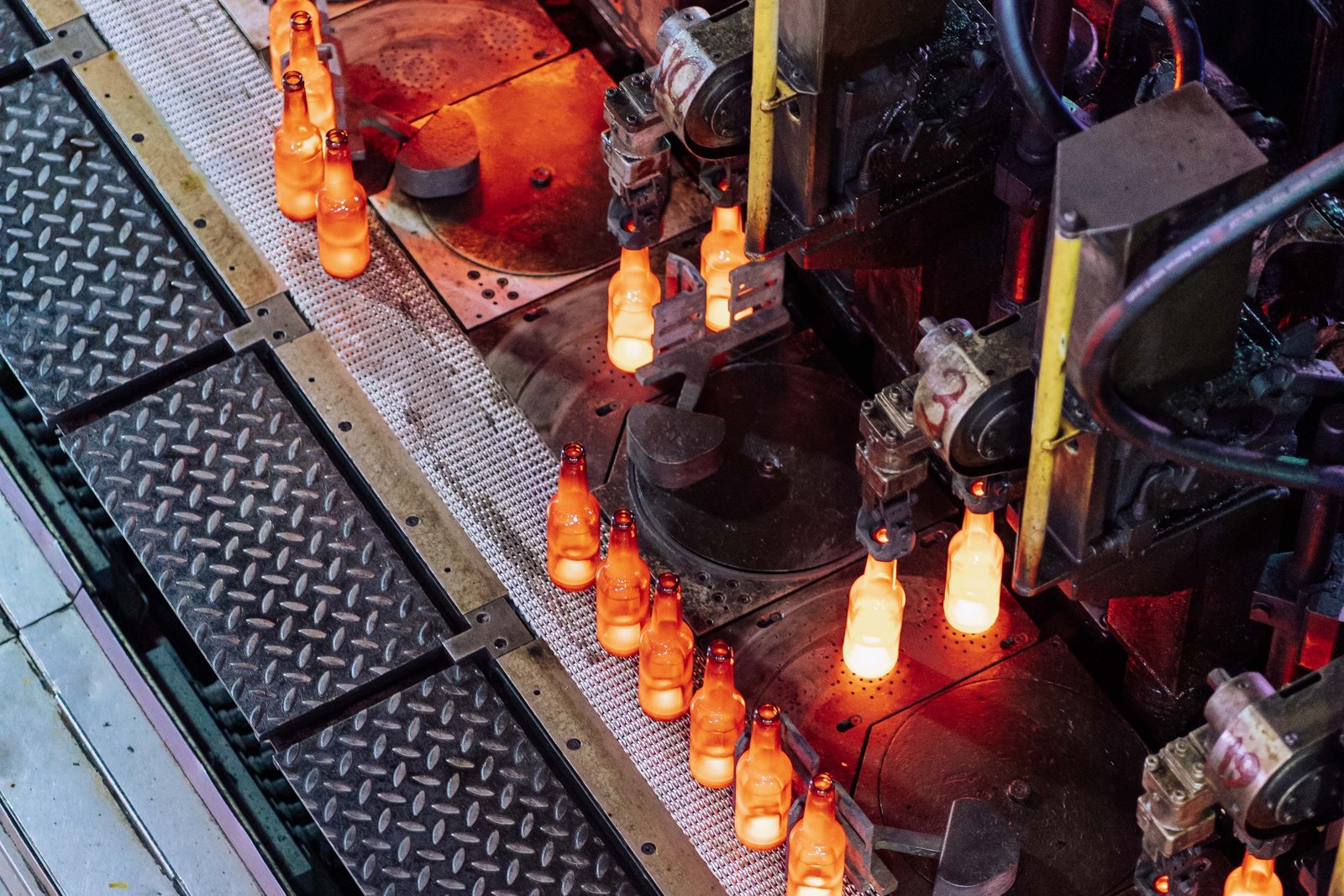
The heavy wine bottle is losing its status
For years, thick glass could signal seriousness before the cork was pulled. Now wine businesses are trying to remove weight from the bottle without removing prestige from the wine. The change is practical, environmental and cultural.