
Journal
Gen Z is drinking. Wine still has to earn its place.
The easy story is that younger adults have stopped drinking. Current data is more awkward: legal-drinking-age Gen Z participation in alcohol has risen, while wine still faces a recruitment and relevance problem. The distinction matters.
The easiest explanation is no longer good enough
Wine has a younger-consumer problem.
That much is difficult to dispute.
The category is contracting in major markets.
Its drinker base has aged.
Traditional wine occasions have weakened.
New recruits are not arriving in the numbers the industry once relied on.
There is a very convenient explanation for all of this.
Gen Z does not drink.
The problem is that current data makes that sentence increasingly difficult to use.
Gen Z is not absent from alcohol
In July 2026, IWSR reported that 74% of legal-drinking-age Gen Z consumers across fifteen key markets were drinking alcohol.
That was up from 66% three years earlier.
It was also close to the 76% rate for the total adult population in the same research.
That does not mean Gen Z drinks like every generation before it.
It does not mean moderation has disappeared.
And it definitely does not mean young people are suddenly becoming traditional wine drinkers.
It means the category needs a better diagnosis.
Because wine is still struggling
Wine's broader numbers remain uncomfortable.
The global category has been contracting.
The International Organisation of Vine and Wine continues to describe falling consumption and changing patterns in mature markets.
IWSR similarly describes structural pressure across wine, even while finding pockets of stronger younger involvement.
Those facts can exist at the same time.
Gen Z can drink alcohol.
Wine can still fail to win enough of those drinking occasions.
That is the distinction.
Wine does not compete only with sobriety
A new legal-age drinker does not walk into the world choosing between:
wine
and
no alcohol.
They are choosing between wine and an enormous drinks market.
Beer.
Cocktails.
Spirits.
RTDs.
Hard seltzers.
No-alcohol products.
Low-alcohol products.
Coffee at an occasion where previous generations might have drunk.
Or nothing.
Wine's competition has become wider precisely as some of its old cultural defaults have become weaker.
RTDs understand something wine often makes difficult
An RTD usually tells you what it is trying to do.
Flavour.
Strength.
Format.
Occasion.
Open it.
Drink it.
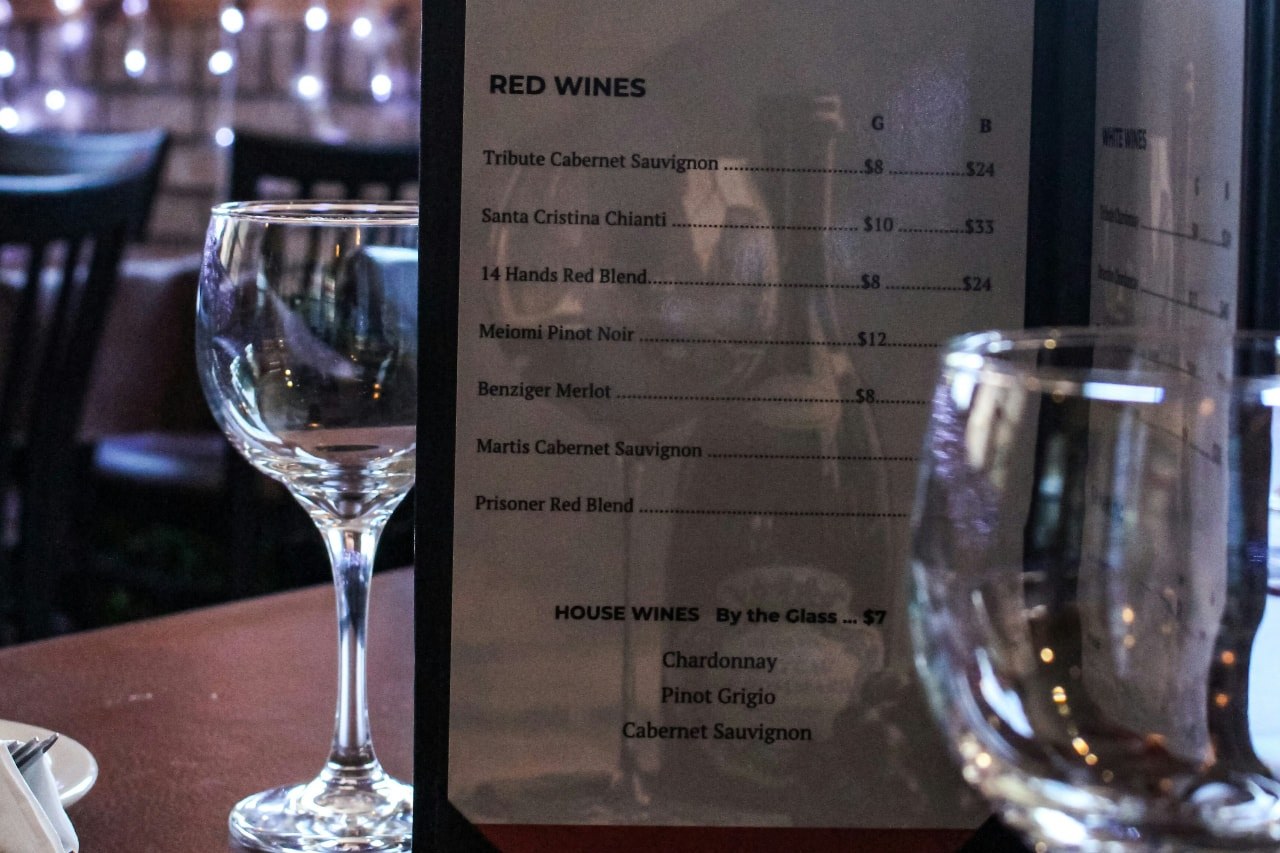
Wine can ask for substantially more knowledge before the first decision.
Grape.
Region.
Appellation.
Vintage.
Producer.
Classification.
Style.
Sweetness, sometimes hidden behind vocabulary.
Whether the wine is likely to feel light, rich, tannic, fresh or oaky may be less obvious than the geographical hierarchy on the front label.
For an enthusiast, this complexity is part of the pleasure.
For a new recruit, it can be a tax.
Accessibility is not the same as dumbing wine down
This is where the industry often becomes defensive.
Make wine easier to understand and somebody worries the category will lose seriousness.
But accessibility is not a request to remove Burgundy from Burgundy.
It is a request to make the first decision possible before the reader has learned Burgundy.
Those are different things.
A person can discover appellations after they know they enjoy the drink.
Wine knowledge does not have to be an entrance fee.
Younger wine drinkers may actually be more interesting than the headline suggests
IWSR's recent work is not uniformly pessimistic about younger drinkers.
In several markets, younger legal-drinking-age consumers are taking a larger share of the wine-drinking base.
Those who engage can be experimental.
Interested.
Willing to spend.
Open to unfamiliar styles and formats.
That is not the profile of a generation incapable of caring about wine.
It is the profile of a consumer who may need a reason to care.
Moderation still matters
None of this is an argument against the health and moderation shift.
No- and low-alcohol wine continues to grow.
Consumers increasingly move between full-strength, low-alcohol and alcohol-free choices depending on the occasion.
That changes volume.
It changes frequency.
It changes what a “wine drinker” even means.
The mistake is turning moderation into a total explanation for every category problem.
People can drink less often and still choose wine.
The question is whether they do.
Wine has lost some of its inherited occasions
For previous generations in many wine markets, wine did not always have to explain why it belonged.
Dinner.
Sunday lunch.
A bottle at home.
A restaurant.
A celebration.
The occasion carried the category.
When those habits weaken, wine has to make its case more actively.
What is this bottle for?
Why should I choose it?
How will it taste?
What will it feel like?
What should I buy if I liked the last one?
Those are basic questions.
Wine still answers some of them as though curiosity itself should be enough.
The industry should find this diagnosis slightly encouraging
If young adults simply did not drink alcohol, wine would have limited power to change the situation.
But if younger adults are participating while wine underperforms, at least part of the problem is competitive.
That is harder on the ego.
It is also more actionable.
Packaging can change.
Language can change.
Formats can change.
Restaurant lists can change.
Education can change.
The route from “I liked that” to “what should I drink next?” can become easier.
None of that requires stripping wine of place, history or complexity.
It requires deciding which complexity belongs at the entrance.
Wine still has something its competitors cannot easily copy
Wine changes with place.
With time.
With farming.
With the year.
With the person who made it.
That depth is why the category remains worth learning.
But depth is not the same thing as opacity.
A great museum can contain difficult art without hiding the front door.
Wine should be able to do the same.
Gen Z is not the solution either
Generational stories are seductive because they make markets sound tidy.
Boomers did this.
Millennials did that.
Gen Z wants something else.
Real consumers are messier.
Income matters.
Country matters.
Culture matters.
Age matters.
Health matters.
Occasion matters.
The most useful lesson from the current data is therefore not:
Gen Z will save wine.
It is:
stop blaming a generation for a category problem that is more complicated than abstinence.
Wine has to earn the next glass
Younger adults are not automatically rejecting alcohol.
They are not automatically choosing wine either.
That is the uncomfortable middle ground.
Wine is one option among many.
Its history does not guarantee the occasion.
Its complexity does not guarantee curiosity.
Its prestige does not guarantee relevance.
The category has to make the case.
That may be bad news for inherited habits.
It is good news for anyone trying to build wine culture around clarity rather than intimidation.
Sources
- IWSR, “Increased Gen Z drinking sustained, Boomers drinking moderates”, 14 July 2026: https://www.theiwsr.com/insight/press-release/increased-gen-z-drinking-sustained-boomers-drinking-moderates/
- International Organisation of Vine and Wine (OIV), “State of the World Wine Sector in 2025”, 2026: https://www.oiv.int/sites/default/files/documents/OIV-State_of_the_World_Wine_Sector_in_2025_0.pdf
Read next
Guide
How to choose from a restaurant wine list
You do not need to understand the whole list. Decide what you want the wine to do, set the budget, give one useful reference, and let the rest of the information narrow the choice.
Learn
How to read a wine label without learning another language
Most wine labels contain more information than you need and less explanation than you want. Start with six things: who made it, where it comes from, the grape if shown, the vintage, any useful local style term and the alcohol level.
Journal
Why wine lists make normal people feel stupid
You can be perfectly capable of choosing dinner, booking a hotel and running your own life. Then somebody hands you a wine list and suddenly you need to know what Volnay means.