Learn
How to read a wine label without learning another language
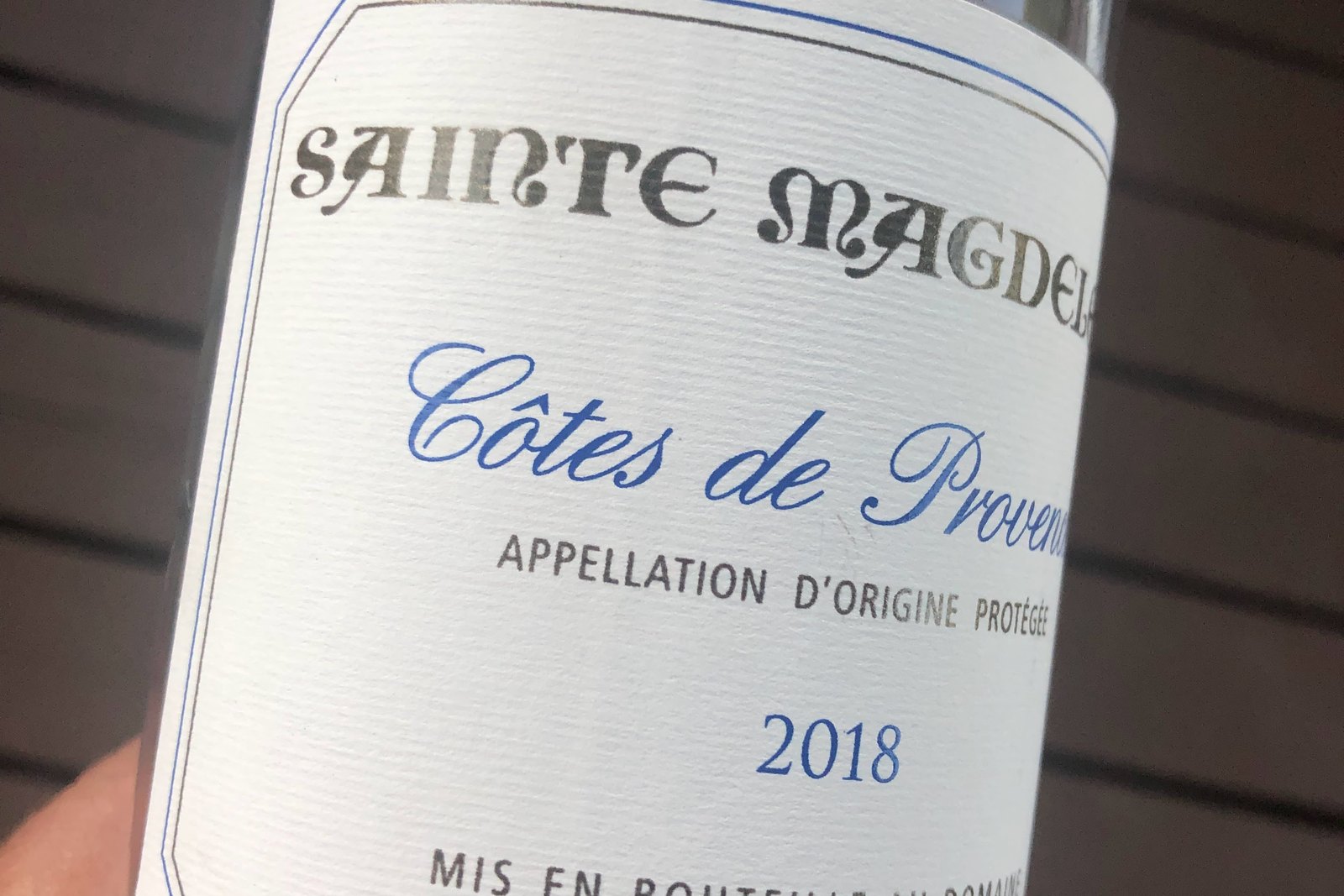
Most wine labels contain more information than you need and less explanation than you want. Start with six things: who made it, where it comes from, the grape if shown, the vintage, any useful local style term and the alcohol level.
You do not need to translate the whole label
Wine labels can make a simple drink look like an entrance exam.
A producer name.
A château.
A village.
A vineyard.
An appellation.
A vintage.
A grape, perhaps.
Then several smaller lines in French, Italian, Spanish or German.
The mistake is assuming every word matters equally.
It does not.
A wine label is not a tasting note.
It is partly an identity document, partly a legal label and partly marketing.
Your job is not to decode everything.
Your job is to find the few pieces of information that change what you should expect.
First: who is the repeatable identity?
Start with the producer, estate or brand.
This is often the most useful piece of information if you want to find the wine again.
It might appear as:
Domaine...
Château...
Weingut...
Bodega...
A family name.
A company name.
Or simply a brand.
Do not get trapped by the vocabulary.
You are looking for the answer to:
Who is this bottle asking me to remember?
One caution.
The small-print bottler named for legal purposes is not always the same thing as the grower, estate or winemaker you are trying to identify.
So start with the prominent identity, then use the back label if you need to understand who actually bottled it.
Second: find the place
Next, find where the wine comes from.
Sometimes this is easy.
Marlborough.
Napa Valley.
Mendoza.
Sometimes the place is doing far more work.
Burgundy is a good example.
A Bourgogne label may foreground an appellation, village or vineyard rather than spelling out the grape in the largest type.
That is not the wine trying to hide the answer.
It is a different labelling tradition.
In many European wine systems, the place name is also a regulated identity.
It can carry rules about origin and production.
You do not need to memorise all of those rules.
You simply need to recognise that the place may be one of the most information-dense words on the bottle.
Third: look for the grape, but do not panic if it is missing
If the grape is written clearly, useful.
Chardonnay.
Riesling.
Pinot Noir.
Malbec.
You now know something important about the raw material.
But if you cannot see a grape name, do not assume you have missed something.
The label may be organised around place instead.
Or the wine may be a blend.
Or the grape information may sit on the back.
This is one reason a French bottle can feel harder to read than a bottle that simply says:
MALBEC
MENDOZA
2025
The French wine is not necessarily more complicated.
Its label is just using different shorthand.
Fourth: the vintage is the harvest year
If you see a vintage year on the bottle, it usually identifies the harvest year.
Not the year you bought it.
Not necessarily the year it was bottled.
That gives you context.
The same producer and vineyard can taste different from one vintage to the next because the growing season changed.
But do not turn vintage into a score.
A famous year is not a guarantee that every bottle is excellent.
A less celebrated year is not a reason to reject every wine.
For everyday drinking, producer, style and bottle condition may matter more to your enjoyment than whether a critic once called the vintage legendary.
Fifth: decode only the style words that change the wine
This is where people often disappear into wine terminology.
Do not.
Learn a classification word when it changes your expectation of the bottle in front of you.
For example, Rioja uses terms such as:
Crianza.
Reserva.
Gran Reserva.
Those words are not decorative.
They sit inside a regulated local ageing system.
So they can tell you something useful about how the wine has been matured.
But this is the important part:
Classification words are local.
A term on a Spanish label should not be treated as one rung on a universal ladder alongside an unrelated term from Burgundy, Germany or Italy.
There is no single global hierarchy hiding behind all the languages.
Learn the term you need.
Then stop.
Sixth: use the alcohol level as context
The alcohol percentage is one of the easiest numbers to find.
It is worth noticing.
It can sometimes help you build an expectation about the wine's scale or style.
But treat it as one clue.
Not a verdict.
A 14.5% wine is not automatically rich.
A 12% wine is not automatically light.
Higher alcohol is not higher quality.
Lower alcohol is not automatically more elegant.
Wine has too many interacting variables for that.
Use the number as context.
Then keep reading.
What about all the other small print?
Some of it is important legally.
Volume.
Alcohol.
Origin.
Bottler information.
Allergens.
Lot details.
Depending on where the wine is sold, you may also see ingredients or nutrition information on the label or through an electronic link.
That information has a purpose.
It is simply not the same as learning how the wine is likely to taste.
Then there is back-label copy.
“Handcrafted.”
“Passion.”
“Tradition.”
“Exceptional terroir.”
“Meticulously selected.”
Read it if you enjoy it.
Just do not confuse adjectives with evidence.
If the back label gives you concrete information about grape varieties, vineyard, fermentation, oak, sweetness or ageing, that can be useful.
If it only tells you the family has loved wine for generations, you have learned less about the glass.
A label has five different kinds of information
When a bottle feels confusing, sort the words mentally.
Identity
Producer.
Estate.
Brand.
Cuvée name.
Origin
Country.
Region.
Appellation.
Village.
Vineyard.
Content
Grape.
Blend.
Vintage.
Alcohol.
Style or production
Crianza.
Reserva.
Brut.
Late harvest.
Oak-aged.
Skin contact.
And similar terms whose exact meaning depends on context.
Compliance or marketing
Bottler details.
Volume.
Lot.
Allergens.
Mandatory legal text.
Plus the poetry somebody wrote to sell the wine.
Once you separate those categories, the label becomes much quieter.
What people often misunderstand
The biggest word must be the grape
No.
It may be the producer.
It may be the appellation.
It may be a proprietary wine name.
An appellation is a quality score
No.
It tells you that the wine meets the relevant origin and production rules.
It does not guarantee that you will like the bottle.
Vintage tells me whether the wine is good
Not by itself.
It tells you when the grapes were grown.
What happened next still matters.
More classification words mean a better wine
No.
They mean whatever that particular system says they mean.
Nothing more.
The back label will tell me how it tastes
Sometimes.
But much wine copy is deliberately broad.
Concrete production information is more useful than praise.
The 20-second method
Next time you pick up a bottle, do this in order:
- Who made it?
- Where is it from?
- What grape is it, if stated?
- What year is it?
- Is there one style or classification word I actually need to understand?
- What is the alcohol level?
Then stop.
If those six answers make sense, you already know enough to make a more informed decision than someone trying to translate every decorative line on the bottle.
Try this
Take three bottles from different countries.
Do not search anything yet.
Give yourself twenty seconds per label.
Write down:
Producer.
Place.
Grape, if visible.
Vintage.
One style term you do not understand.
Alcohol.
Then look up only the unknown term that would actually change your buying decision.
Not every word.
This is how label knowledge becomes useful instead of encyclopaedic.
Worth knowing
Wine labels are becoming more information-heavy in some markets. Under current EU rules, the ingredient list and full nutrition declaration can be provided electronically, while energy value and allergen information still appear on the physical label. That improves transparency, but it does not remove the need to know what kind of information you are looking at. Ingredients tell you ingredients. An appellation tells you origin and rules. A vintage tells you the harvest year. A producer tells you identity. None of them, alone, tells you whether you will love the wine. That still requires judgement.
Sources
- European Commission, “New rules for wine labelling enter into application”, 7 December 2023: https://agriculture.ec.europa.eu/media/news/new-rules-wine-labelling-enter-application-2023-12-07_en
- Regulation (EU) No 1308/2013, Article 119, consolidated version: https://eur-lex.europa.eu/eli/reg/2013/1308/2026-03-18/eng
- Commission Delegated Regulation (EU) 2019/33, Article 49: https://eur-lex.europa.eu/legal-content/EN/TXT/?uri=celex:32019R0033
- Consejo Regulador DOCa Rioja, “Classification”: https://riojawine.com/en-gb/the-designation/classification/
- Bourgogne Wines, “Compulsory details: a question of labeling”: https://www.bourgogne-wines.com/food-and-wine-combinations/choosing-and-serving-wine/reading-wine-labels/compulsory-details/compulsory-details-a-question-of-labeling,2456,9242.html
- GOV.UK, “Wine labelling”: https://www.gov.uk/government/publications/wine-labelling/wine-labelling
Places in this piece
Burgundy
Burgundy is easier once you stop trying to memorise famous names. Chardonnay and Pinot Noir do most of the work; the place on the label tells you how narrowly the wine's origin has been defined.
Rioja
Rioja is more than Tempranillo plus oak. It spans three major zones, permits 14 grape varieties and classifies wine by both origin and ageing: useful information, as long as you do not mistake the category for the taste.
Read next
Learn
Why the same grape can taste completely different
A grape name is a useful clue, not a flavour recipe. Place, weather, harvest timing, fermentation, oak, lees and time can pull the same variety in strikingly different directions.
Learn
The best wine question isn’t “what can you smell?”
Aromas matter enormously in wine. Being able to turn them into a confident list of fruits, flowers and household objects matters much less.
Learn
Why place matters
Place can change wine because it changes the conditions in which the vine grows. Climate, water, topography, soil and human practice interact, but that is very different from saying you can literally taste rocks in the glass.
Journal
The wine label is finally telling you more. Just not always on the label.
European wine rules now require ingredient and nutrition information that wine long avoided. But much of it can live behind a QR code. Transparency has arrived in wine in a very wine-like way: real, useful and still slightly hidden.